MOSCOW, October 26, 2026 — The crisp autumn air outside the Skolkovo Innovation Center carries a distinct charge of anticipation this morning. Inside the sprawling glass-and-steel complex, history is unfolding. The inaugural International Space Games have officially commenced, transforming this hub of technological development into a hyper-realistic proving ground for the next generation of space exploration.
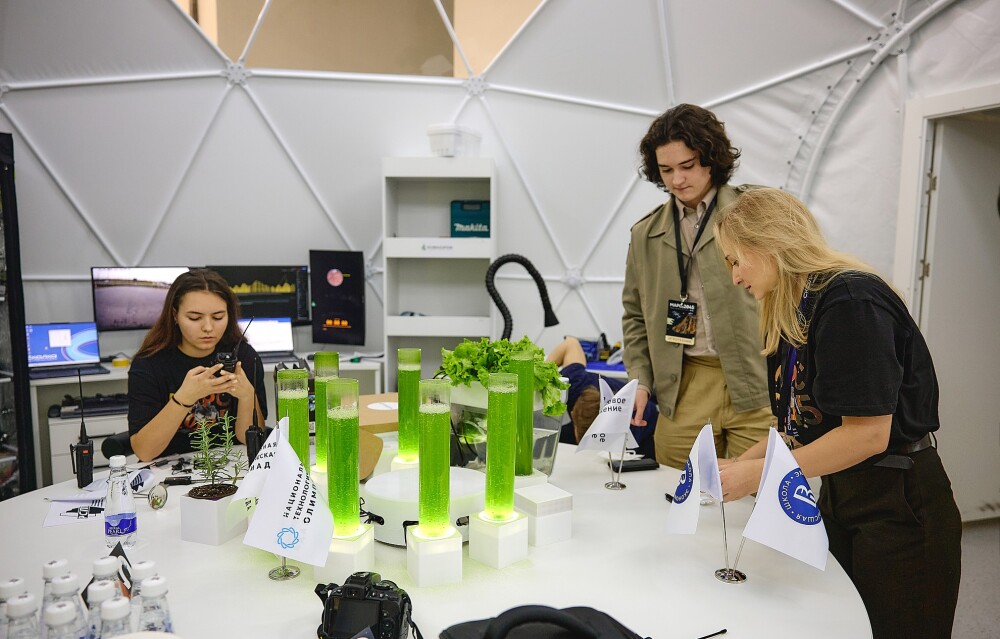
The main exhibition hall has been meticulously converted into a dual-environment simulation facility. One half replicates the harsh, dusty terrain of a lunar outpost, complete with regolith simulants and modular habitat structures. The other half houses a full-scale mock-up of a Martian transit vehicle, its corridors lined with glowing control panels, tactile switches, and the faint, sterile scent of ozone and recycled air.
Teams representing eight different nations stand at the ready, clad in specialized mission uniforms that bear the subtle insignias of their respective institutions. There is no grandstanding or political rhetoric here; the atmosphere is one of intense, focused collaboration. Engineers, astrophysics students, and systems designers move with practiced precision, running final diagnostics on communication headsets and reviewing holographic schematics projected from wrist-mounted displays.
At precisely 0900 hours, the first major challenge begins. The simulation thrusts the participants into a complex orbital docking scenario, compounded by an unexpected, randomized critical system failure in the primary navigation array. The room falls into a state of controlled urgency. Rapid-fire technical jargon fills the air as crew members coordinate manual overrides. Fingers dance across touchscreens, recalibrating thruster vectors and rerouting power from non-essential life support systems. For twenty tense minutes, the only sounds are the hum of servers, the beep of telemetry alerts, and the calm, measured voices of the team commanders. When the simulated docking sequence finally locks into place with a satisfying digital chime, a collective, palpable exhale ripples through the observation deck.
Beyond the sealed doors of the simulation chambers, the broader campus buzzes with a different kind of energy. Impromptu clusters of participants and technical observers gather in the atrium, debating the merits of ion propulsion versus chemical thrusters, sharing open-source code for robotic arm articulation, and exchanging mission patches. The boundaries of language and nationality dissolve in the face of shared technical passion.
As the afternoon sun casts long, golden shadows across the campus, the first day of the Games draws to a close. The initial trials have tested not just technical acumen, but resilience and the ability to innovate under pressure. The coming days will bring more grueling scenarios, from extravehicular activity repairs to complex medical emergencies in isolated environments.
This is more than a competition. It is a vivid, living blueprint of humanity’s shared future among the stars, being written in real-time, one simulated maneuver at a time.
About the author
